
What Does Your Story Sound Like?
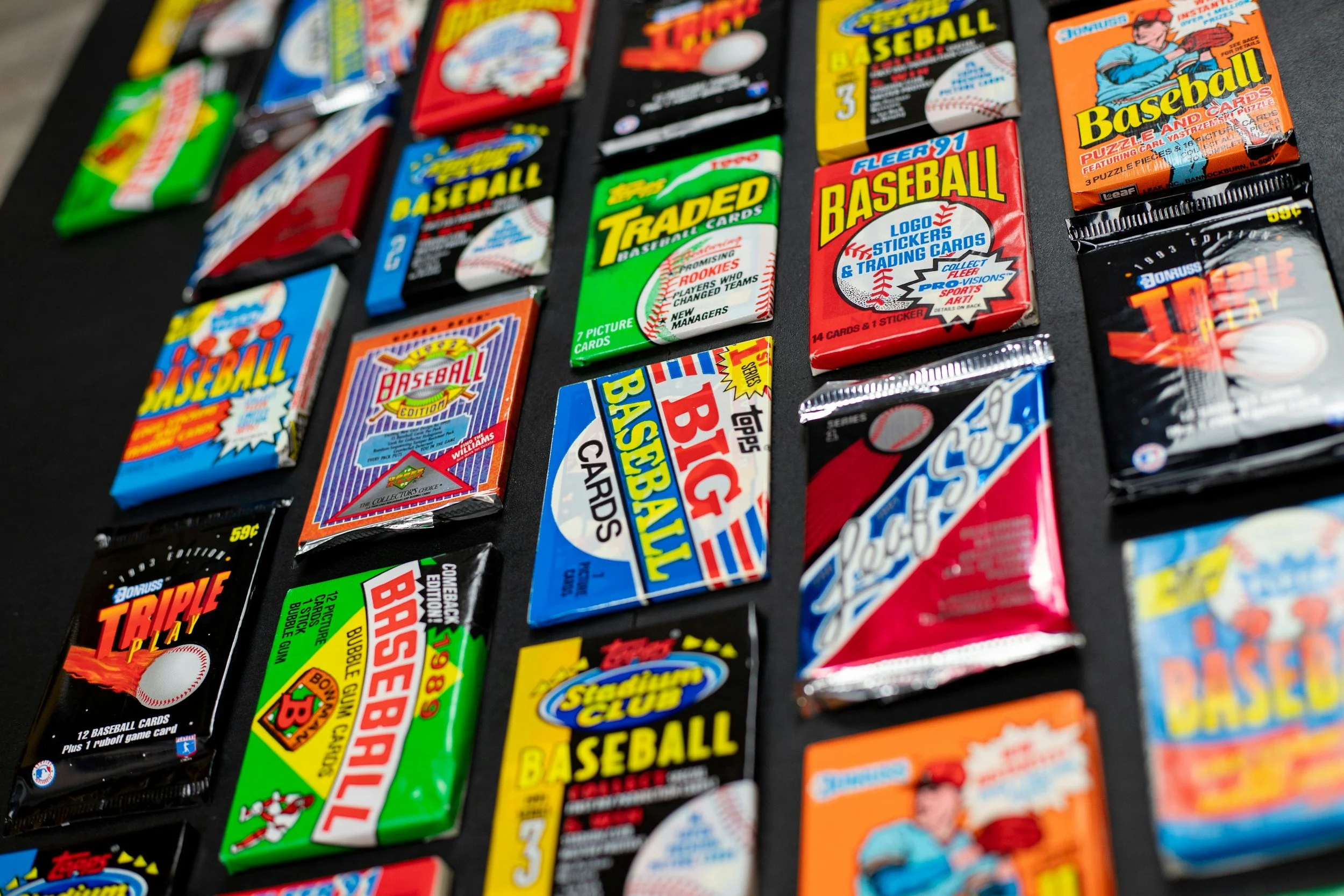
I’m digitizing old cassettes and video tapes from my college years at the University of Maine, and came across a television story I did about baseball card collecting that taught me a lesson I still use today: What does your story sound like?
Most of the time, it’s an obvious question in radio, but sound matters just as much in television, where it’s easy to assume the pictures are doing all the storytelling. The framing questions are:
When working on a story, what sounds do we expect to hear?
And, just as important, what unexpected sounds might help tell it?
For this story, I interviewed two kids who collected baseball cards and an owner of a baseball card shop. The challenge was that baseball card collecting isn’t exactly a sound‑rich subject. No cheering crowds. No crack of the bat. Just people flipping through cards in their collection. At that time, I was still figuring out how to structure stories and think beyond doing basic interviews. I certainly wasn't listening for the kinds of sounds that could help tell the story.
I was talking with the owner while the photographer was recording. Then I watched as the photographer suddenly raced to the other end of the store and set the camera down for a few moments. This may not sound like much, but professional video cameras were bulkier in the late 1980s. Moving quickly meant carrying the camera on one shoulder and the large tape deck bag on the other, hoping you didn't trip over the cable connecting the two.
At the time, I had no idea why he suddenly rushed across the room. It turned out the shopkeeper was listening to the start of a Boston Red Sox broadcast, and the national anthem was playing. The photographer recognized something I didn't: the sound of baseball belonged in a story about baseball cards. It may sound odd, but he set his video camera down next to the radio in order to record audio for a story done for television.
I didn’t understand the magnitude of what he did until later when I was editing the story. Because this was video, I assumed we had to show the radio playing the national anthem. We didn’t.
As you’ll see in this very college-produced video, that extra effort served my story pretty well. Listen for how the national anthem ties the story to baseball and gives the visuals a layer of meaning they wouldn’t have on their own:
Many years later at WBHM in Birmingham, AL, I went with our local reporter who was doing a story about college hockey at the University of Alabama-Huntsville. At the time, this was the only Division 1 team in the South. As the players skated onto the ice, "Sweet Home Alabama" blasted through the arena speakers.
Instantly, I thought back to that baseball card shop and the photographer who had rushed across the room to record the national anthem coming from a radio. I pointed out to the reporter that this might be one of those moments worth capturing. In that moment, I wasn’t teaching anything new. I was simply seeing the same opportunity that photographer saw years earlier.
The lesson has stayed with me ever since. Whether radio, television or online, pay attention to all the sounds around you. Great sounds often turn up when you least expect them. And if you're lucky, one day you'll find yourself passing that lesson along to someone else.